
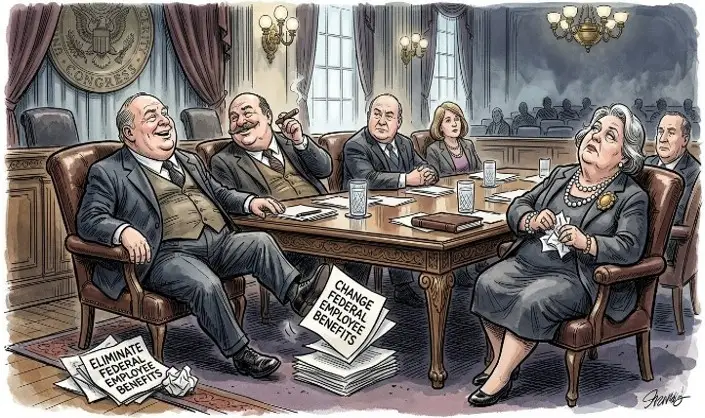
Hardworking and loyal federal employees face a landscape of shifting compensation and retirement policies that demand careful tracking. Recent executive actions set a modest 1% baseline pay increase for 2026 while holding locality pay entirely frozen. Additionally, a gap persists between older retirement systems and the Federal Employees Retirement System (FERS), where newer retirees receive a capped 2% cost-of-living adjustment (COLA) compared to the 2.8% adjustment given to older systems. Public sector unions continue to lobby Congress for parity through the Equal COLA Act to close this difference.
Proposed Structural Reforms to Federal Careers
- Eliminating the FERS Supplement: Legislative proposals aim to cancel the Special Retirement Supplement for future hires, removing the financial bridge used by early retirees before Social Security eligibility.
- Recalculating Pension Annuities: Active fiscal restructuring plans seek to change the pension baseline calculation from the traditional “high-three” average salary years to a “high-five” average, reducing overall future payouts.
- The Protections Ultimatum: Lawmakers are considering a policy forcing future civil servants to choose between paying a steep 9.4% retirement contribution to retain basic job protections or keeping the current rate and converting to “at-will” employment status without job security.
The Impact of Social Security Insolvency
- Direct FERS Vulnerability: FERS relies directly on Social Security as a core pillar of its three-part retirement structure, making federal retirement security deeply dependent on the health of national trust funds.
- Automatic Benefit Reductions: Official projections indicate the Old-Age trust fund reserves face depletion by late 2032, which triggers a mandatory, automatic 24% benefit cut across the board under current law if Congress fails to intervene.
- Legislative Gridlock: Proposed fixes include the Medicare and Social Security Fair Share Act, which aims to lift the payroll tax cap on annual incomes above $400,000, alongside other proposals to limit high-end benefits.