and
The Mandatory ROTH contributions
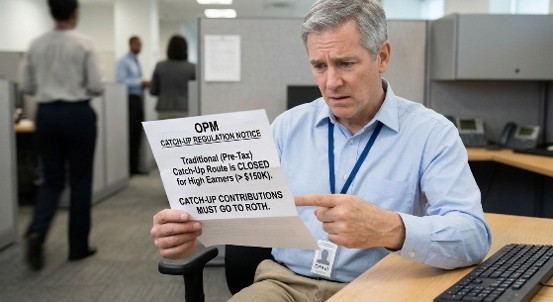
The rules governing the Thrift Savings Plan have taken a sharp, costly turn for older workers who find themselves bringing home a bigger paycheck. Under a federal mandate known as SECURE 2.0, Uncle Sam has slammed the brakes on a long-standing tax loophole used by high-earning civil servants. For decades, any employee aged 50 or older could easily stash an extra cushion of money, known as “Catch-Up” contributions, directly into their traditional, pre-tax TSP account to instantly lower their yearly income tax bill. But starting right now, if a worker’s earnings topped the $150,000 mark in the previous calendar year, that pre-tax door is officially locked tight.
To clear up the confusion circulating on the agency floor, this new regulation does not stop an experienced worker from building up their retirement savings, but it fundamentally changes how they must pay for it. The government still allows you to max out your standard, base retirement contributions completely tax-free. However, the moment a high earner tries to add that extra layer of catch-up money on top, the payroll system will automatically hijack those specific dollars and force them straight into a Roth bucket. With use Roth savings are built strictly with after-tax money, these extra contributions are hit by the IRS immediately, resulting in a noticeable drop in the worker’s current take-home pay.
For the hard working federal and postal employee trying to navigate this new financial terrain, failing to adjust your cash flow strategies means facing an unexpected dent in your active household budget.
